
If you’ve been in a car accident, you might be wondering: should you replace your car seat? It’s a question that many overlook but can be crucial for your safety.
Your car seat is designed to protect you in a crash, but after an accident, it might not work the same way. Knowing when to replace it could save your life or the lives of your loved ones. Keep reading, and you’ll learn exactly how to tell if your car seat is still safe or if it’s time to get a new one.
Don’t take chances with your safety—understanding this could make all the difference.

Credit: tadchievlaw.com
Signs Of Car Seat Damage
Car seats protect children during accidents. Damage to a car seat can reduce its safety. Knowing the signs of damage helps decide if replacement is needed. Check your car seat carefully after any crash. Look for physical damage and wear that may not be obvious.
Visible Cracks And Deformations
Cracks in the plastic shell weaken the seat’s structure. Deformations change the shape and reduce protection. Even small cracks can spread and cause failure. Look closely at all parts of the seat. Pay attention to the base, sides, and back.
Impact On Harness And Straps
Straps should be strong and free from cuts or frays. Damage weakens their ability to hold a child safely. Check for stretched or twisted straps that may slip. The harness must tighten and release smoothly. Worn or damaged straps must be replaced immediately.
Compromised Buckles And Latches
Buckles secure the child in the seat. Broken or sticky buckles may not lock correctly. Latches hold the seat firmly in the car. Damaged latches reduce stability and increase risk. Test all buckles and latches after an accident. Replace the seat if any part fails to work.
Manufacturer Guidelines
Manufacturer guidelines are the best source for knowing when to replace a car seat after an accident. They provide specific rules to keep your child safe. Always follow these instructions carefully.
Checking The User Manual
The user manual has clear information about seat replacement. It tells you if the seat must be replaced after any crash. Look for sections on safety and accident advice.
Keep the manual in a safe place for quick access. If you lost it, check the maker’s website for a digital copy.
Expiration Dates
Car seats have expiration dates set by the manufacturer. These dates ensure the seat works well and stays safe. A seat near its expiration should be replaced, even without a crash.
Check the seat label or manual for the expiry date. Using a seat past this date can be risky.
Recall Notices
Manufacturers issue recalls for car seats with safety problems. A recalled seat might need to be replaced or repaired. Check recall lists regularly for updates.
Visit the manufacturer’s website or government safety sites to see if your seat is affected.
Severity Of The Accident
The severity of a car accident greatly affects whether you need to replace your car seat. Seats are designed to protect you during crashes. Even small damage can weaken their safety. Understanding the crash impact helps decide if replacement is necessary. This section explains how different accident severities affect car seat safety.
Low-speed Collisions
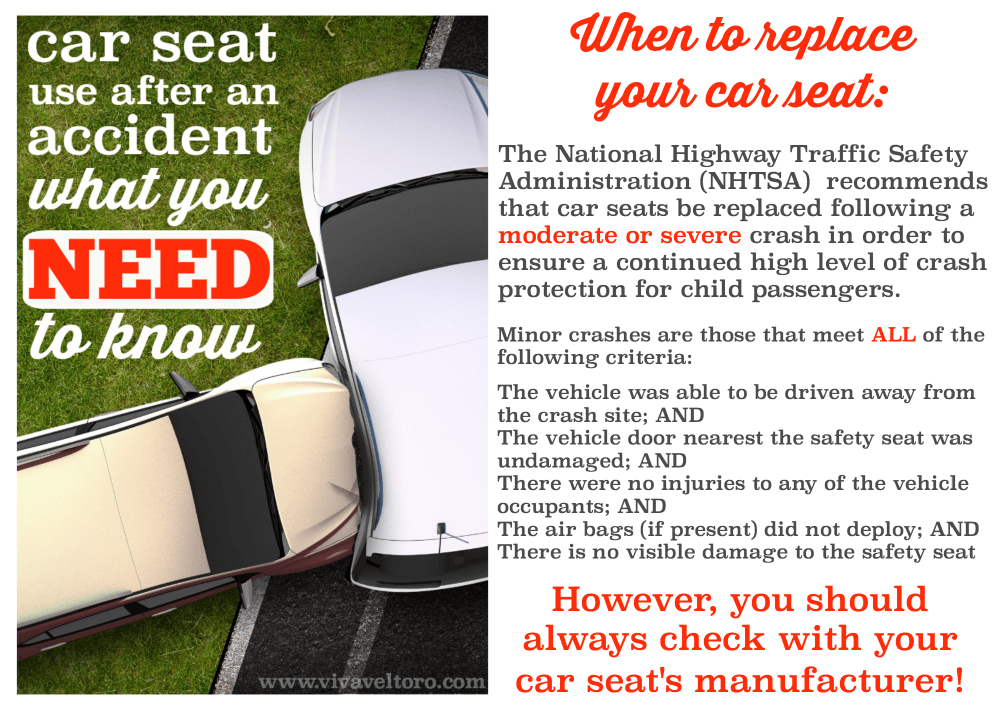
Low-speed collisions often cause minimal damage to car seats. Minor bumps or fender benders usually do not affect the seat’s structure. In many cases, a thorough inspection is enough. Look for visible cracks, broken parts, or loose components. If none are found, the seat may still be safe to use. Always check the manufacturer’s guidelines for specific advice.
High-impact Crashes
High-impact crashes can severely damage car seats. The force can break internal parts or weaken the frame. Even if damage is not visible, the seat may no longer provide full protection. It is best to replace the seat after such crashes. Safety is critical and compromised seats can put lives at risk. Don’t take chances with high-impact collisions.
Multiple Impact Considerations
Multiple impacts increase the risk of hidden damage. Each crash adds stress to the seat’s materials. Over time, this can reduce its ability to protect occupants. Inspect the seat carefully after every accident, even minor ones. If the seat has been in several crashes, consider replacing it. Safety should always be the priority in all cases.
Credit: www.vivaveltoro.com
Professional Inspection
After a car accident, a professional inspection of your car seat is crucial. This check ensures your seat still protects you and your passengers. Trained experts can find hidden damage that you might miss. Trusting a skilled technician helps keep your car safe.
Certified Technicians
Certified technicians have the right training to inspect car seats after accidents. They know how to spot cracks, breaks, and other issues. Their expertise guarantees a thorough and accurate check. Always choose certified experts for safety.
Inspection Services
Inspection services include detailed tests of the car seat’s frame and harness. Technicians check for any signs of stress or malfunction. They also verify if the seat still meets safety standards. These services protect you from using a damaged seat.
When To Seek Expert Advice
Seek expert advice immediately after a crash, even if damage is not visible. Any collision can weaken the car seat’s structure. If the seat feels loose or parts look bent, call a professional. Early inspection prevents unsafe driving conditions.
Replacing The Car Seat
Replacing the car seat after an accident is important for your child’s safety. Even small crashes can weaken the seat’s structure. A damaged seat may not protect your child in another crash. Choosing a new seat carefully and installing it correctly ensures safety on every trip.
Choosing The Right Seat
Select a seat that fits your child’s age, weight, and height. Check for safety certifications on the label. Look for seats with strong side impact protection. Pick a model that is easy to install and adjust. Avoid used seats unless you know their full history.
Installation Tips
Read the car seat manual and your vehicle’s guide. Use the correct seat belt or LATCH system for installation. Tighten the seat firmly so it does not move more than one inch. Adjust the harness straps to fit snugly on your child. Double-check the angle to keep your child’s head safe.
Disposing Of Old Seats Safely
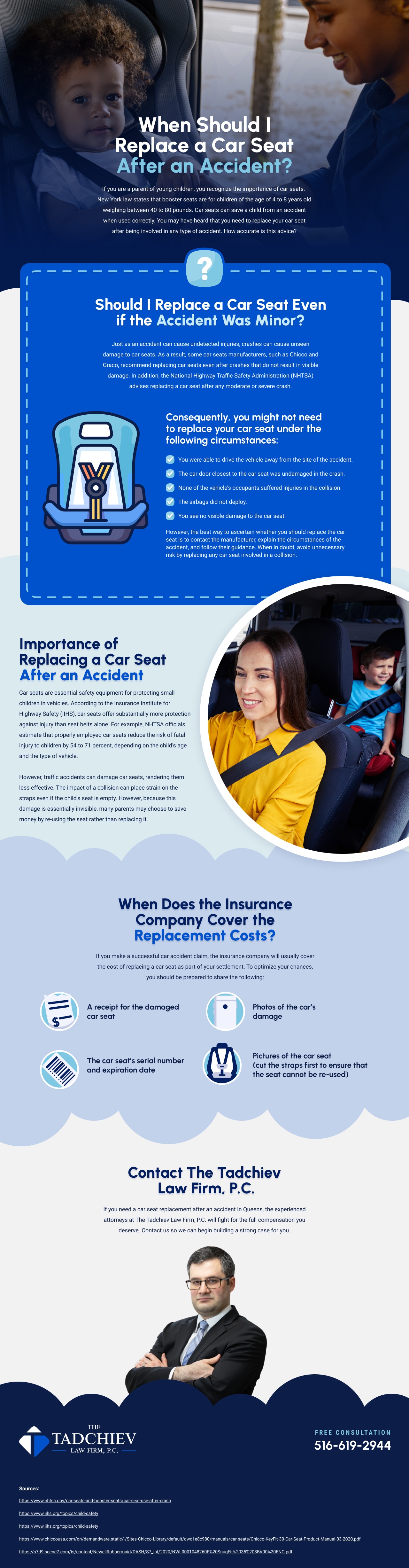
Do not give away or sell a seat involved in a crash. Cut the straps and padding to prevent reuse. Remove the label with crash information if possible. Check local recycling rules for plastics and metal parts. Dispose of the seat in the trash only if no recycling options exist.
Credit: tadchievlaw.com
Preventive Measures
Preventive measures help keep car seats safe after an accident. These steps reduce risks and extend the seat’s lifespan. Taking care of the car seat protects your child’s safety. Simple habits make a big difference.
Regular Maintenance
Check the car seat for wear and tear often. Look for cracks, broken parts, or loose straps. Clean the seat to remove dirt and debris. Follow the manufacturer’s cleaning instructions carefully. Regular checks catch problems early before they get worse.
Proper Installation Checks
Make sure the car seat is installed correctly every time. Use the vehicle’s seat belt or LATCH system as directed. Tighten the seat so it does not move more than an inch. Read the manual to confirm installation steps. A secure seat reduces injury risk during crashes.
Keeping Records Of Accidents
Keep a detailed record of any accident involving the car seat. Note the date, severity, and damage to the seat. Save receipts if you replace the seat after a crash. This information helps decide if you need a new seat. It also supports warranty claims or insurance requests.
Frequently Asked Questions
When Should I Replace My Car Seat After An Accident?
You should replace your car seat immediately if it was involved in a moderate to severe accident. Damage may be invisible but can compromise safety. Always follow manufacturer guidelines and consult a professional to ensure the seat’s integrity is intact.
Can Minor Accidents Damage Car Seat Safety?
Yes, even minor accidents can weaken the car seat structure. Small cracks or stress points may not be visible but reduce protection. Inspect the seat thoroughly and replace it if you notice any damage or after an impact.
How Do I Know If My Car Seat Is Safe Post-accident?
Check for visible damage, cracks, or broken parts after an accident. Also, review the seat’s expiration date and manufacturer’s accident replacement policy. If unsure, it’s safest to replace the seat to ensure maximum protection.
Does Car Seat Manufacturer Recommend Replacement After Crashes?
Most manufacturers advise replacing car seats after any moderate or severe crash. This is because the seat’s safety features may be compromised. Always refer to your specific car seat manual for exact recommendations following an accident.
Conclusion
A car accident can damage your seat in ways you might not see. Always check the seat and its safety parts after a crash. Replace the seat if it shows cracks, breaks, or any changes in shape. Your safety depends on a strong, intact car seat.
Don’t risk using a seat that might fail in another accident. When in doubt, ask a professional to inspect it. Staying safe on the road means knowing when to replace your car seat. Safety first, always.
